Does self-testing work better than rereading your notes?
Probably, yes, for much of what GCSE and A-level exams ask you to recall and use. Self-testing comes out well in large research reviews and rereading comes out poorly. But the evidence from real classrooms is thinner and more mixed than revision posters imply, so treat it as a good bet rather than a guarantee.
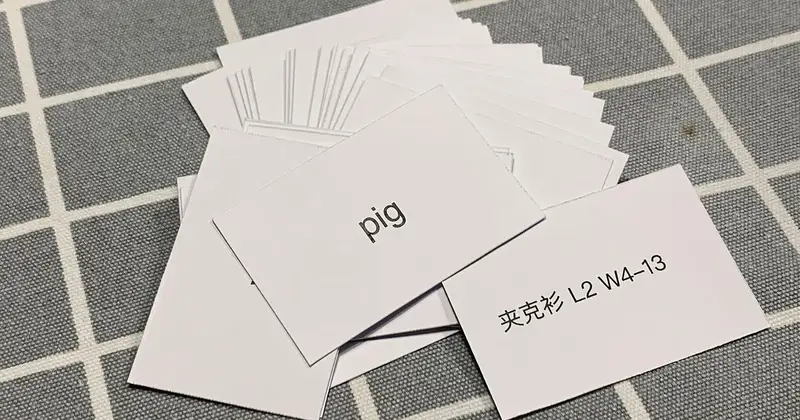

This is one of the most repeated claims in study advice, and it is often repeated more confidently than the researchers themselves put it. So here is what we can actually point to, and where it stops.
What the big review found
The study usually behind the claim is a 2013 monograph by John Dunlosky and colleagues in Psychological Science in the Public Interest. They assessed ten study techniques and rated each one high, medium or low for usefulness. According to the Association for Psychological Science's summary, two came out high: practice testing, which helped students of many ages and ability levels, and distributed practice, which means spreading study sessions over time.
Underlining, rereading and mnemonic devices were described as being "of surprisingly low utility". That wording deserves care. It does not say rereading teaches you nothing. It is a comparative judgement about how far the evidence supports a technique, and the summary adds that those techniques were difficult to implement properly.
What changes in a real classroom
Laboratory results do not transfer automatically to a Year 11 class in March. In 2021 the Education Endowment Foundation published a systematic review on exactly that gap, looking at cognitive science in classrooms for pupils aged 3 to 18. We read it through a summary from Eton College's Centre for Innovation and Research in Learning, which notes several limits:
- The applied classroom evidence is more limited, more complex and less positive than the laboratory evidence.
- Many strategies had only been tested with particular age groups, subjects or outcomes.
- Knowing a principle does not mean applying it well. Done badly, a technique can lose whatever made it useful.
The same summary describes spacing as needing careful planning, and reports some evidence that interleaving (switching between problem types within a session) suits problem-solving tasks where pupils choose their own strategy. It adds that some pupils may need solid foundations first. None of this overturns the case for self-testing. It just explains why honest advice has to include words like "probably".
There is also a gap worth saying aloud: most of this research is about pupils being taught, not about what a 17-year-old does alone at a desk. Applying it to independent revision is a reasonable inference. We are not aware of it being a settled finding.
Why a flash card can still be useless
A card only tests you if answering it takes some effort and you can tell whether you were right. Here are two versions of the same card, marked up as a teacher might.
Back: a full paragraph copied from the textbook
Back: Into the cell, by osmosis, across the partially permeable membrane, from higher to lower water potential.
A routine to try for a fortnight
This is our suggestion, built from the principles above. It has not been tested as a package, so judge it by what it does for your own marks.
- Blank page first. Before opening anything, write down all you can on the topic for five minutes.
- Check and mark. Compare with your notes. Use a highlighter only on what you missed.
- Make questions from the gaps. Two or three cards or short questions, no more.
- Come back later. Try the same questions a few days on, then again after a longer gap. We know of no proven perfect interval for your exams, so fit it to your timetable.
- Move to exam questions. Cards can leave you strong on facts and weak on using them. Past papers show whether the knowledge holds up under a real question.
When self-testing feels worse but may not be
Rereading feels pleasant because the page looks familiar. Testing yourself feels bad because you see the gaps straight away. It is tempting to take that discomfort as a sign the method is failing. Try to judge it over a couple of weeks instead, using questions you have not seen before.
Some subjects need more than recall. An English essay or a history source question depends on building an argument, and we would not assume that card practice alone carries over to that, given how much of the evidence concerns particular subjects and outcomes. Use recall for the quotations, dates and terms. Then practise the writing as writing.
If you left school years ago
Adult learners often fall back on the way they revised at 16, usually a lot of rereading and highlighting. If you are studying alone on a distance learning course, nobody is setting you regular tests, so building your own short ones may matter more. The caveat stands: the reviews above were not written about you specifically. Try it, keep an eye on your assignment feedback, and drop it if it is not earning its time.
Sources
- Association for Psychological Science summary of Dunlosky and colleagues (2013)
- Eton College CIRL summary of the EEF cognitive science review
Sources opened and last checked 8 November 2026. Rules and figures change, so check the current version before acting on them. Written by the editors of Moor Study. Spotted a mistake? Email [email protected].