Can you retake a GCSE as an adult, and what does it cost?
Yes. In England there are two main routes. If you have not already got a grade 4 or C in English or maths, you may be entitled to a fully funded course. For anything else, or if you want to study on your own, you can enter as a private candidate through an exam centre, and pay the fees that centre sets.
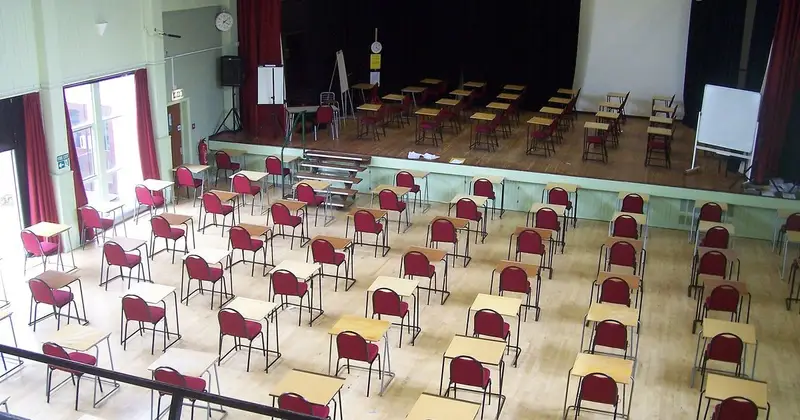

We read the rules for this piece and found no upper age limit on either route. The harder part is logistics. Finding a centre that will take you is usually the first real obstacle, so sort that out before you buy a textbook.
Route one: a funded English or maths course
GOV.UK's funding guidance describes a legal entitlement for adults who have not previously achieved a GCSE at grade C or grade 4 or higher in the subject. It covers GCSE English language and GCSE maths with full funding through the adult skills fund. It also covers reformed Functional Skills qualifications from entry level to level 2, along with some smaller stepping-stone qualifications.
That guidance is written mainly for course providers and funders, so ask the college or adult education service to confirm that you qualify, what the course includes and when it starts. Note the phrase "in the subject": a grade 4 in maths does not rule you out for English.
Route two: entering as a private candidate
A private candidate takes exams at an approved centre without being enrolled there. According to the Joint Council for Qualifications, that includes people who are self-taught or distance learning, or who are resitting. You can use this for any subject a centre will accept. You do your own studying and arrange things with the centre yourself.
Four things from JCQ's page are worth knowing before you start:
- It offers a search of centres that may accept private candidates, but warns that some listed may have stopped and others that do may be missing. When we checked, it listed 190.
- Each centre sets its own entry fees, deadlines and paperwork. That is why we cannot give you a reliable cost here: get a quote that includes any admin charges.
- Coursework and non-exam assessment can be the sticking point. You need to check that the centre will handle it for your subject.
- You are responsible for making sure your entries are right, so check your statement of entry when it arrives.
Ofqual's 2026 student guide also advises private candidates to register early, since not all centres accept them. If you are unsure between foundation and higher tier, discuss it with the centre.
Which route suits you?
Yes: ask about the funded course first.
Look at private entry and price up books, the centre's fee and travel.
Ask the employer or course what they will accept. Functional Skills at level 2 might do.
When can you sit it?
The main GCSE series is in summer. In 2026 it ran from 7 May to 23 June. Ofqual's guide also lists November sittings for GCSE English language and maths, for students aged 16 or over on 31 August. Other subjects generally mean waiting for summer. If you miss an exam, the guide warns that there is usually no other chance until the following year, so build travel and shift cover into your plan.
Allow more time than you remember needing at school. Our guide to building a revision timetable starts from the exam date, and that works just as well for someone doing a full-time job. If you have been out of education for a long time, testing yourself is a useful early way to find out what you still remember.
What grade do you need?
Older certificates use letters and current GCSEs in England use numbers. Ofqual's explainer says the two scales are not directly equivalent, but gives three anchor points: the bottom of grade 7 is comparable to the bottom of the old A, grade 4 to the bottom of the old C, and grade 1 to the bottom of the old G. It uses the example of an employer who used to ask for at least a C and would now ask for at least a 4.
You may hear people talk about a "pass", but that guide does not define one. So ask for the number the employer, college or university actually requires, as requirements vary. Wales and Northern Ireland use different grading scales, so if you live there, or the course is there, check locally. This article deals with England.
Questions to ask a centre, before you pay
- Do you accept private candidates for this subject, specification and tier?
- What is the total cost, including any admin or late fees, and what is your entry deadline?
- Which exam board do you use? Your books must match it.
- If there is coursework, a practical or a speaking test, how is it handled?
- Can you put access arrangements in place? JCQ says this is the centre's job and should be raised when you enter, and Ofqual notes that disabled students are entitled to reasonable adjustments.
- Where is the exam held, and what do you need me to bring on the day?
If the goal is university
A GCSE may not be your only missing piece. Adults aiming at a degree often look at the Access to HE Diploma, and that course may be easier to combine with the GCSE you need. Check the entry requirements of the degree first, as some ask for specific GCSEs alongside the Access course.
Sources
- GOV.UK: statutory entitlements, approval criteria
- JCQ: private candidates
- Ofqual student guide 2026: what you need to know before your exams
- Ofqual: GCSE 9 to 1 grade scale explained
Sources opened and last checked 8 November 2026. Rules and figures change, so check the current version before acting on them. Written by the editors of Moor Study. Spotted a mistake? Email [email protected].